- Coupang’s acknowledged data exposure, affecting 33.7 million customers, triggered massive public alarm throughout South Korea concerning the security of their personal details.
- Within just two weeks, inquiries to the Korea Internet & Security Agency’s exposure verification platform surged by 717%, underscoring the scale of customer worry over data leaks.
- Concerns about secondary fraud prompted authorities to implement identity protection and mobile service ban programs nationwide.
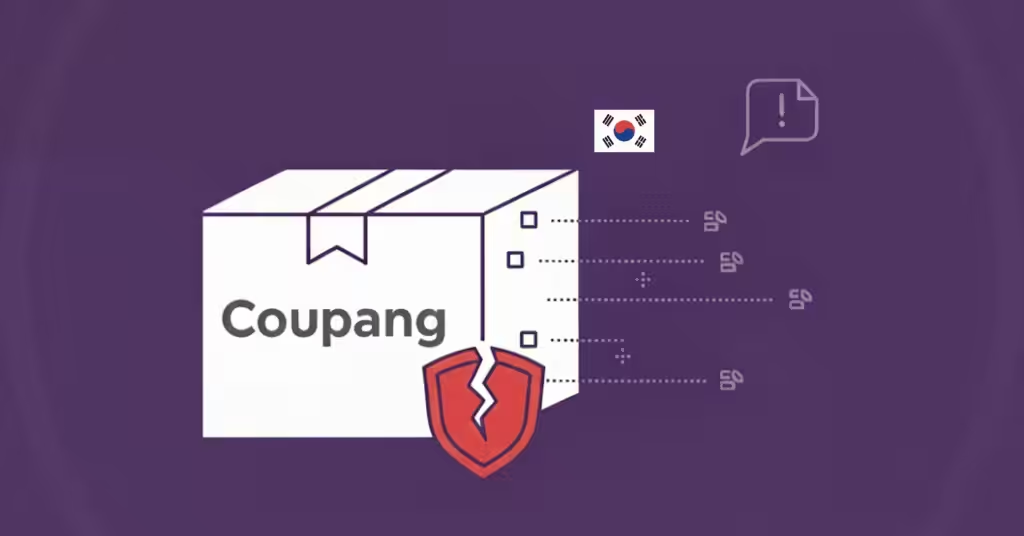
Coupang has suffered an enormous data breach as one of the largest online marketplaces in South Korea. It has also received extensive media attention as well as many responses from citizens of South Korea who are creating ways to protect themselves against becoming victims of identity theft.
Government reports show that news of this incident prompted South Korean citizens to check whether their data was being sold on the dark web. Records indicate that there were high amounts of hits on the official websites of Cyber Security Service providers and a large increase in the sales of fraud prevention products.
It can be concluded that consumers’ data is susceptible to being exposed on the online platform, and when such breaches of trust occur, there is a high level of consumer anxiety.
A 717% Surge in Dark Web Data Confirmations
The KISA’s figures clearly illustrate the extent of the massive public response to this issue. On December 11, 2022, Democratic Party Congressman Lee Jeong-heon was provided with the number of inquiries for the Korea Internet Security Agency’s “Verify your data leak” service from KISA.
KISA received 107,802 inquiries for the Verify Your Data Leak service between Nov. 28, 2022, and Dec. 11, 2022, representing an incredible 717 percent increase from the same time frame last year.
Coupang publicly declared that they had lost 33.7 million customer records on Nov. Experts believe that the astonishing spike in service demand stems from 29. Coupang initially estimated that hackers had compromised only 4,500 accounts.
However, once the number of exposed users increased, the types of breaches it could cause to consumers quickly spread across a nationwide level. The KISA tool provides a method of defending against cyber threats.
It allows users to verify the authenticity of their imports using their emails for up to 30 different online accounts each day, even when criminals unlawfully sell these accounts on various dark websites.
Cybersecurity experts claim this spike in usage rates from the date of announcement of the security breach is a common trend for all major data breaches. But the volume of growth is substantially more than any previously reported to have occurred from these incidents. This event demonstrates the importance that Coupang has to the economies and lives of consumers in South Korea.
Secondary Fraud Concerns Spur Customers’ Demand for Identity Protection
As concerns about the public’s identity grow, many individuals are actively seeking protective services to safeguard their personal information, especially against the rising risk of financial and identity theft. This fear is well-founded, as seen in incidents like the ransomware gang threatening to leak 80,000 Money Mart financial files on the dark web. This trend reflects widespread fear of becoming victims of such crimes.
In fact, the Korea Association for ICT Promotion (KAIT) reports that requests for protective services, created to mitigate identity theft risks, have more than doubled since the Data Leak event became public.
Applications for two KAIT programs experienced the greatest percentage increases, with the number of those applications for the “Subscription Status Inquiry” service—a service that allows users to see all of their mobile and wired telecom accounts that are in their name—reaching 313,362, reflecting a 219% increase from last year.
The “Mobile Service Activation Restriction” program had an even greater increase in demand from last year, with the number of applications to block fraudsters from opening new mobile lines or accounts in the user’s name using their own personal information reaching 462,682—an increase of 273%.