

- A seller claims to have 20GB of files tied to Malaysia’s Littoral Combat Ship project.
- The alleged files include test records, technical drawings, and reports dated from 2014 to 2025.
- Nobody has confirmed if the files are real or how the seller got them.
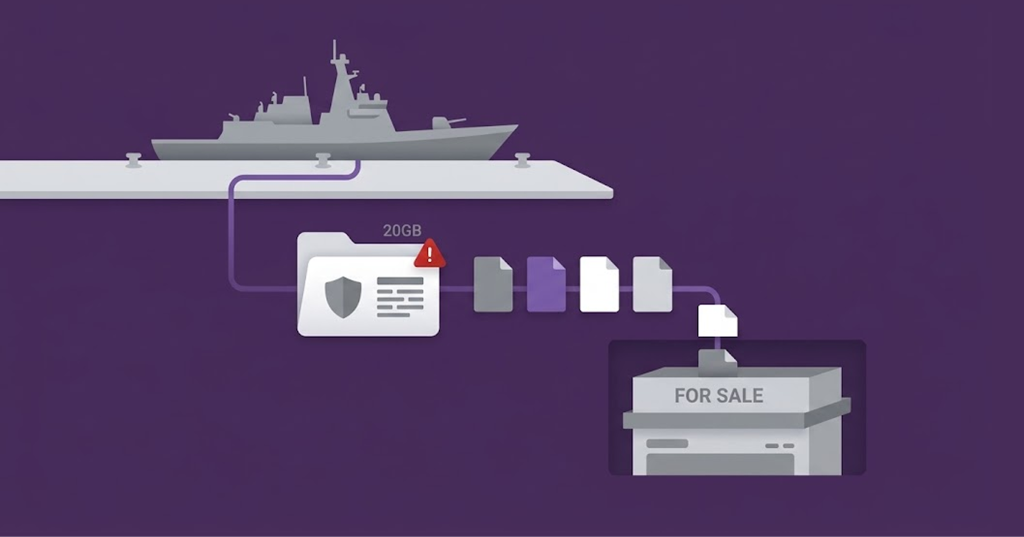
A threat actor posted on X, claiming to sell files linked to Malaysia’s Littoral Combat Ship (LCS) programme. The account Daily Dark Web shared the post. The seller wants only $500 in cryptocurrency for the whole set. That price seems low for a claim this big, and it raises new questions about the alleged deal.
The seller says the files were taken last year. They claim the collection holds about 20GB of data. That data reportedly contains around 30,000 PDF files. The files allegedly span more than ten years, from 2014 to 2025. So far, no outside group has checked if the files are genuine.
Details of the Alleged Sale
According to the post, the files include Factory Acceptance Test (FAT) records. These records normally show how equipment performed during testing. The seller also claims to have calculation reports and technical drawings. Project and engineering documents reportedly round out the collection.
Nobody knows for sure where these files came from. The seller has not named a specific company or office as the source. There is also no proof that the seller truly holds the files being advertised. Right now, this remains an unverified claim from a dark web listing.
Selling stolen files for such a small price is common in these markets. Sellers often want a quick, quiet deal instead of a slow public sale. Still, a low price does not prove the files are fake, just as it does not prove they are real.
In September 2026, a threat actor claimed to have breached Chile’s Ministry of Transport and Telecommunications and shared screenshots as proof. The ministry has not confirmed the breach, and no independent researchers have verified the images, highlighting the need for official confirmation before treating such claims as credible.
Sensitivity of the Programme’s Documents
If the files are real, they could carry more risk than a typical data leak. Technical drawings often show how a system is built. Calculation reports can explain how parts were designed to work together. Test records may reveal how well equipment performed under real conditions.
The LCS programme covers Malaysia’s naval ships and a wide network of defence suppliers. A single leaked drawing might seem harmless on its own. But a large set of files, collected over many years, could tell a fuller story when studied together. That is part of why programmes like this draw close attention from security experts.
At the same time, technical wording in a sales post does not prove the files hold secret or classified information. Experts would need to study the actual documents first. Only then could anyone judge how sensitive the material truly is. Until that happens, claims about the risk stay unconfirmed.
Background on the LCS Programme
Malaysia’s LCS programme has faced scrutiny before this alleged sale. In 2022, the government released reports tied to earlier investigations into the project. Those reports looked into how six LCS vessels were bought and built, as reported by Channel News Asia.
A forensic audit from that time raised further concerns. Investigators found signs that some documents linked to the project may have been mishandled or destroyed. According to The Star, the audit pointed to possible efforts to hide evidence connected to the programme.
Some records tied to the project carry an official confidential label. Malaysian parliamentary documents have referenced material marked “BNS CONFIDENTIAL.” This shows that certain LCS files have already been treated as sensitive by the government itself.
The programme is still active today. Malaysia’s Ministry of Defence stated in January 2026 that the first LCS vessel had reached 82.9% completion. The ministry also said the delivery date moved to December 2026, according to its official statement. Reporting from the Associated Press has also tracked the project’s progress and past setbacks over the years.
For now, this alleged 20GB sale remains an unverified claim from an underground listing. No independent group has obtained or checked the files. Until that happens, it would be too early to call this a confirmed breach of Malaysia’s naval programme. People should treat the claim with caution and watch for any official response from Malaysian defence authorities.
