

- A threat actor claims to have a 379 MB CSV file containing about 1.9 million Careerspace records.
- The listing has not been independently verified, and no public evidence confirms a Careerspace breach.
- If genuine, exposed career and contact data could fuel phishing, spam, and job-themed social engineering.
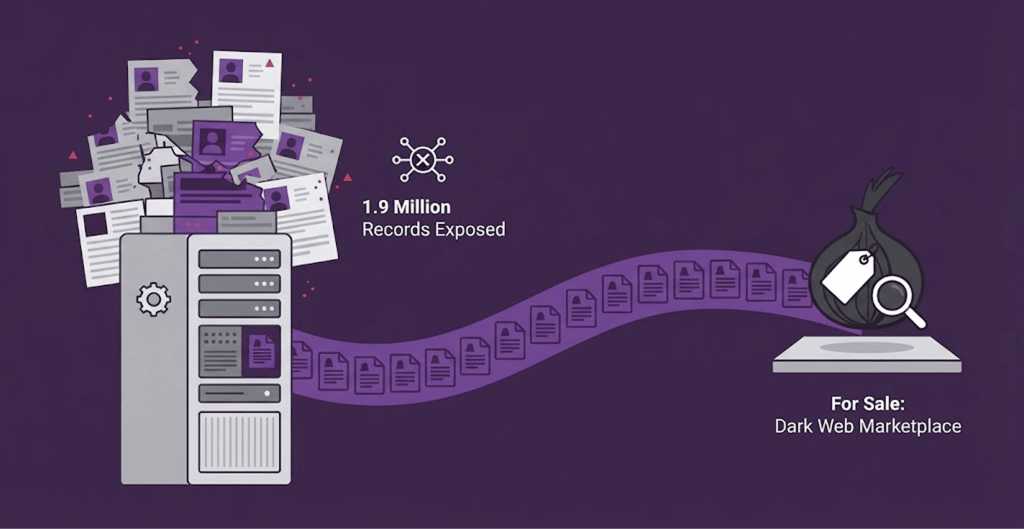
A threat actor is advertising an alleged database from Careerspace, a Russian career and recruitment platform. The seller claims the file contains about 1.9 million records in a 379 MB CSV file.
The claim does not prove Careerspace suffered any data breach. It also does not show when the actor collected the data or where the records came from.
As of the time of writing, there’s no public breach notice or technical evidence confirming a compromise involving Careerspace. That makes the listing an unverified threat actor claim for now.
What the Listing Claims
According to the listing, the alleged database is an extensive list of user and professional information. The seller claims to market this database as something that can be used in B2B lead generation and contact marketing.
Recruitment databases may have information other than just the user’s account information. This may also include names, employment details, contact information, location, and profiles of the users.
However, the listing itself does not provide any confirmation about the fields included in the file. It also does not confirm whether all 1.9 million rows are unique users.
Malicious actors are known to sell old data, cloned data, partial databases, or combined databases. Duplicate record count is another possibility with such databases. File size is not an evidence of anything.
Careerspace Confirms It Handles Personal Data
According to Careerspace’s own documentation, the platform handles personal data. The privacy policy says the company collects information from people visiting or registering on the website. It also processes any information provided via the website forms.
The privacy policy includes automatic information such as IP addresses, information about the user’s browser, access time, requested pages, device information, and cookies.
Careerspace also specified in its privacy policy that the company processes personal data for communications, job opportunities, research, and marketing purposes. In some cases, the company may share personal data with partners as well.
The terms of use define “Careerspace database” as “a pool of resumes of applicants which are offered on the Careerspace domain.” The terms of use also include information about account information and specify that users can register with the help of information provided via the website or other applications.
This is the evidence that the advertised large set of data can be related to Careerspace and include professional information. Nevertheless, it does not prove that the advertised file was created by the company.
The Platform has a Public Footprint
Careerspace claims to be a career platform that provides assistance in finding a job and getting career help. Also, the company’s LinkedIn page shows they’re based in Moscow, started operations in 2020, and now have somewhere between 11 and 50 employees.
If you look at their Telegram channel, you’ll see they’re really active in hiring, posting all kinds of job openings, career advice, and support for job seekers. Archived posts also advertised jobs with direct recruiter contacts.
That public activity does not confirm the database claim. It does show that Careerspace handles professional profiles and recruitment data. Still, plausibility is not evidence of a breach.
No Confirmation of a Live Compromise
The most critical question is whether the breach actually happened and Careerspace lost the database.
Unfortunately, the information analyzed above does not prove this fact. Searches for the alleged sale did not turn up a public technical report, a company breach notice, or a reliable security researcher report confirming the incident.
The listing also does not establish where the data came from. A similar unverified claim involved Notion, where a hacker advertised hacker claims to sell 150 million Notion user records, but Evidence is Missing without providing sufficient evidence to confirm the alleged dataset. Without safe samples, timestamps, database structure, or other evidence, the source remains uncertain.
The data could also come from an older export or from publicly available sources. The threat actor may have obtained it through legitimate access and repackaged it for sale.
Potential Risks for Users
If the claim proves genuine and the data was not already public, affected users could face targeted abuse.
Career data may provide valuable context to scammers’ messages. Hackers can impersonate a recruiter, employer, hiring manager, or career platform. Correspondence referring to a job or one’s job search tends to be more believable.
Exposed contact details could also support spam and phishing campaigns. In addition, attackers may combine professional data with other data leaks in order to create more advanced profiles.
For this reason, users should be careful regarding job offers, interviews, documents requests, and recruiter’s messages. They should avoid opening unfamiliar files or sharing passwords and verification codes.
The Claim Remains Unverified
Currently, there’s no reliable public evidence reviewed for this article that confirms that Careerspace systems were compromised. Careerspace’s policies confirm that it processes personal and resume-related information, but they don’t mean the latest files are from the company.
Watch for a Careerspace statement, independent sample checks, and evidence that the data matches genuine platform records. Until that happens, the listing and all that it claims remain what it is.
